
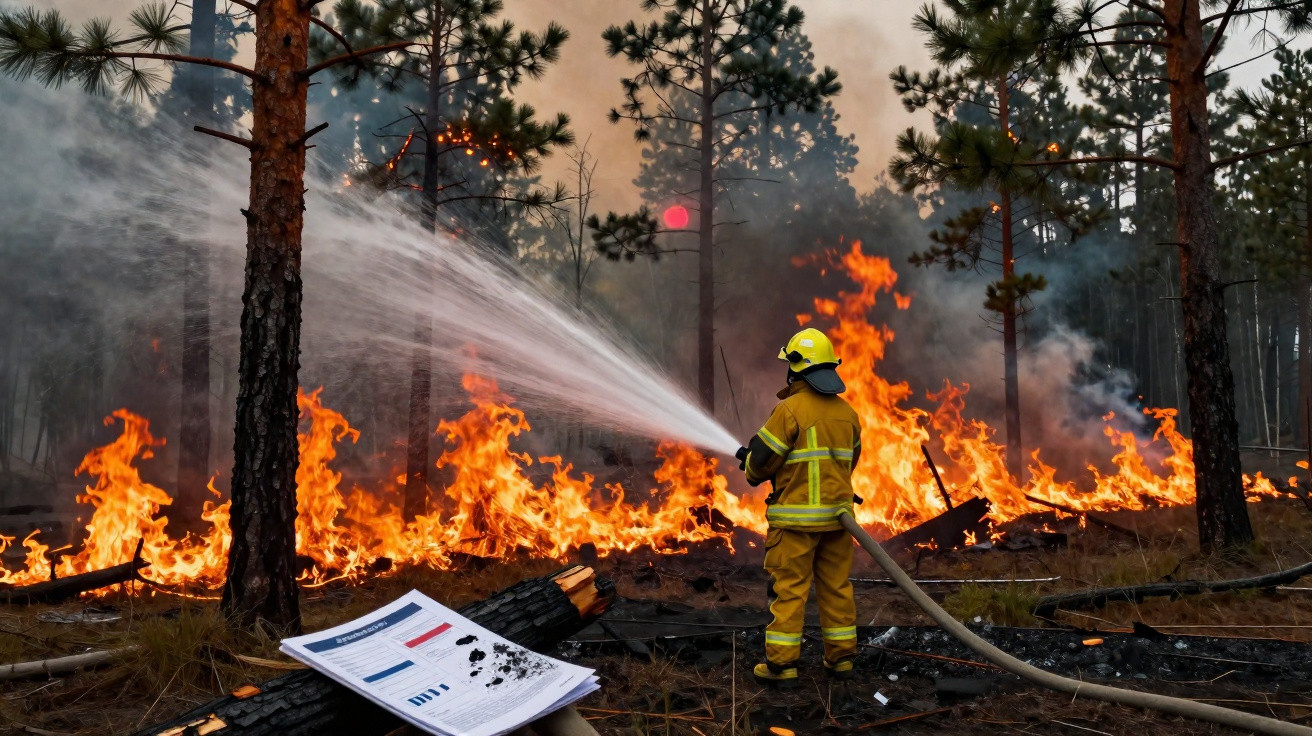
Over the past two decades, extreme forest fires have doubled in both frequency and intensity. A recently published study has brought this worrying deterioration to light.
The flames engulfing forests have become a genuine scourge, growing steadily over the last 20 years. A recent analysis published on 24 June 2024 in Nature Ecology & Evolution, based on more than two decades of satellite observations, reveals an alarming reality: the frequency of extreme fires doubled between 2003 and 2023. This dramatic rise, closely linked to global warming, rightly raises serious concerns about its effects on the environment and human health.
The exceptionally destructive consequences of this trend underline the urgent need to address a growing threat that is literally consuming natural spaces and endangering ecological balance.
The alarming rise in forest fires
The study’s data present a deeply troubling picture of how forest fires have evolved. By closely examining almost 2,900 major incidents over more than 20 years, the researchers used satellite observations to measure their radiative power.
This refers to the amount of energy emitted as electromagnetic radiation, chiefly infrared light. It is measured in watts per square metre (W/m²). The higher it is, the more intense the fire and the more heat it releases. The findings are unequivocal: between 2003 and 2023, these devastating blazes more than doubled, recording a dramatic 2.2-fold increase.
Calum Cunningham, an ecologist at the University of Tasmania and lead author of the study, did not conceal his surprise at this alarming escalation. “I expected an increase, but this rate of increase alarmed me,” he explained. More concerning still, the cumulative intensity of the most severe fires has grown exponentially, accelerating sharply since 2017.
It might be assumed that this increase mainly affects forests in dry regions, but that is not the case. The ecosystems bearing the brunt of this resurgence are temperate conifer forests and the vast boreal expanses.
For instance, in the western United States, fires affecting conifers increased elevenfold; equivalent to a 1,000% rise. In boreal forests, stretching from Alaska through northern Canada to the far reaches of Russia, extreme fires increased sevenfold (a 600% increase). These habitats, which are naturally prone to fire, are now being weakened by increasingly dry and scorching climatic conditions, intensified by global warming.
Global warming’s feedback loop
Global warming is the main catalyst behind the growing number of devastating fires. By drying and heating the atmosphere, it creates conditions that favour the spread of forest blazes. Cunningham told AFP: “The effects of climate change are no longer in the future and we are now seeing the signs of an atmosphere that is drying and warming.” These conditions intensify not only the ignition of fires, but also their severity and duration.
When a forest burns, it releases enormous quantities of carbon dioxide, fuelling a vicious cycle. Vegetation, normally a carbon sink, becomes an emissions source when it burns. This is the feedback effect: global warming fuels fires, which in turn intensify the phenomenon.
Catastrophic consequences of extreme forest fires
Beyond the ecological disaster, these megafires have alarming health consequences. The air pollution they produce is a major driver of premature mortality. In 2015, fires in Indonesia led to 100,000 excess deaths. Smoke plumes laden with fine particles and toxic chemicals can pollute the air hundreds of kilometres away, causing serious respiratory and cardiovascular illnesses.
These destructive fires also disrupt ecosystems and local economies. Biodiversity declines, soils deteriorate and natural habitats vanish. The loss of forest cover reduces the ability to absorb CO2, worsening global warming. Local communities see their resources, homes and infrastructure destroyed, suffering substantial economic losses.
The loss of property and livelihoods can force people to leave their home regions, creating migration flows and integration challenges in host areas. Marginalised and vulnerable groups, including women, children and older people, are often hit hardest by the consequences of megafires, because their access to resources and support services is limited.
In 2019 and 2020, fires in Australia burned more than 20 million hectares of forest, claiming 33 lives. In 2021, the megafires that devastated British Columbia, Canada, caused estimated damage of more than 10 billion Canadian dollars, destroyed thousands of homes and led to the evacuation of tens of thousands of people.
Civilisation is, quite literally, choking under the effects of these fires, which are only worsening. Geographical areas that were once spared are now threatened by the increasing frequency and intensity of this phenomenon. There is no mistaking it: the situation is more than alarming and would require urgent collective action. Ignoring these warning signs means heading towards an even more catastrophic situation. Because, yes, it can still get worse.






Comments
No comments yet. Be the first to comment!
Leave a Comment