
“Impure Citizenship” is a column by the writer Valter Hugo Mãe.
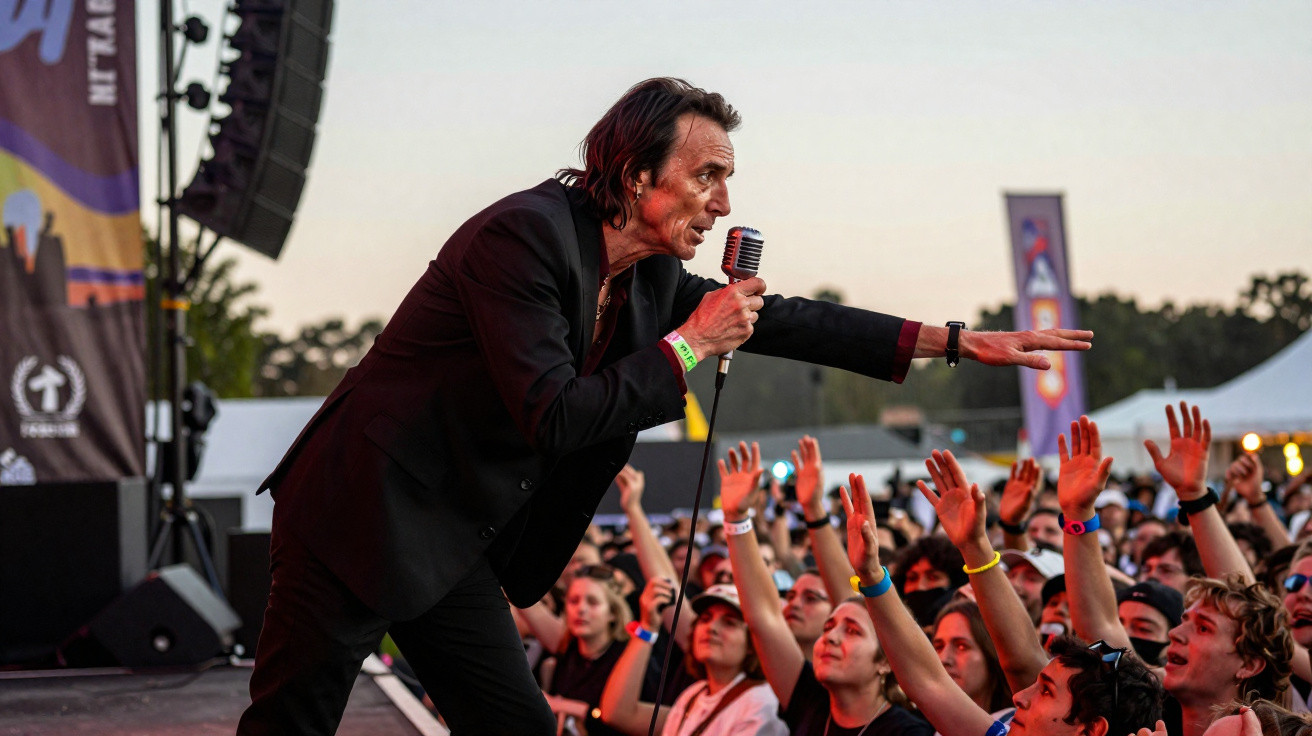
Nick Cave and the sacred dimension of live performance
Over time, Nick Cave’s particular way of mourning has brought an ever-deeper sense of the sacred to his concerts. We are no longer at an occasion where music simply creates a celebration; instead, music compels us to revisit everything in life in order to celebrate, give thanks and heal. Nick Cave’s power has long exceeded sound alone: it has involved awareness and commitment, an overwhelming presence of introspection and the imagined creation of characters, which amounts to sounding out humanity in its universality. To stand before this man, now almost seventy, is to encounter a formidable witness to what it means to be human: to think, to feel and to need to carry on.
The spiritual quality of Nick Cave’s concerts does not mean they become masses imitating religious practice. Rather, it is rock reaching an age at which it can offer a solution, not merely pose a problem. It is like a protest party finally taking on the responsibility and maturity of governing public affairs. The rock star’s role is now to combine disruptive force with the recognition that much escapes us, and that accepting this can only make us more human.
Grief, judgement and Nick Cave at Nos Alive
Throughout my life, “Your funeral my trial” has been my favourite Nick Cave song. Now, though, I cannot hear it without the acutely sarcastic sense that it intrudes upon the tragic fate of his children. We are all judged by the deaths of children, and no parent can feel absolved in the face of such a thing. There is a prison for bereaved parents. There is also a mystery that will never be solved.
At Nos Alive, Nick Cave’s concert became an extended way of weeping. Not because we literally needed to wipe away tears, but because it is impossible to face the potent sum of a life without being moved. Like looking at a Goya painting or reading Proust, witnessing a concert of this kind means falling inward, certain that there can be no wholly intact return. Along the way, under judgement, we all considered our own prisons and our immensely difficult freedom. As is said of forest peoples, this man is a leader: a figure raised above the collective to embody the splendour of our vulnerable condition, as well as our capacity to endure.





Comments
No comments yet. Be the first to comment!
Leave a Comment