
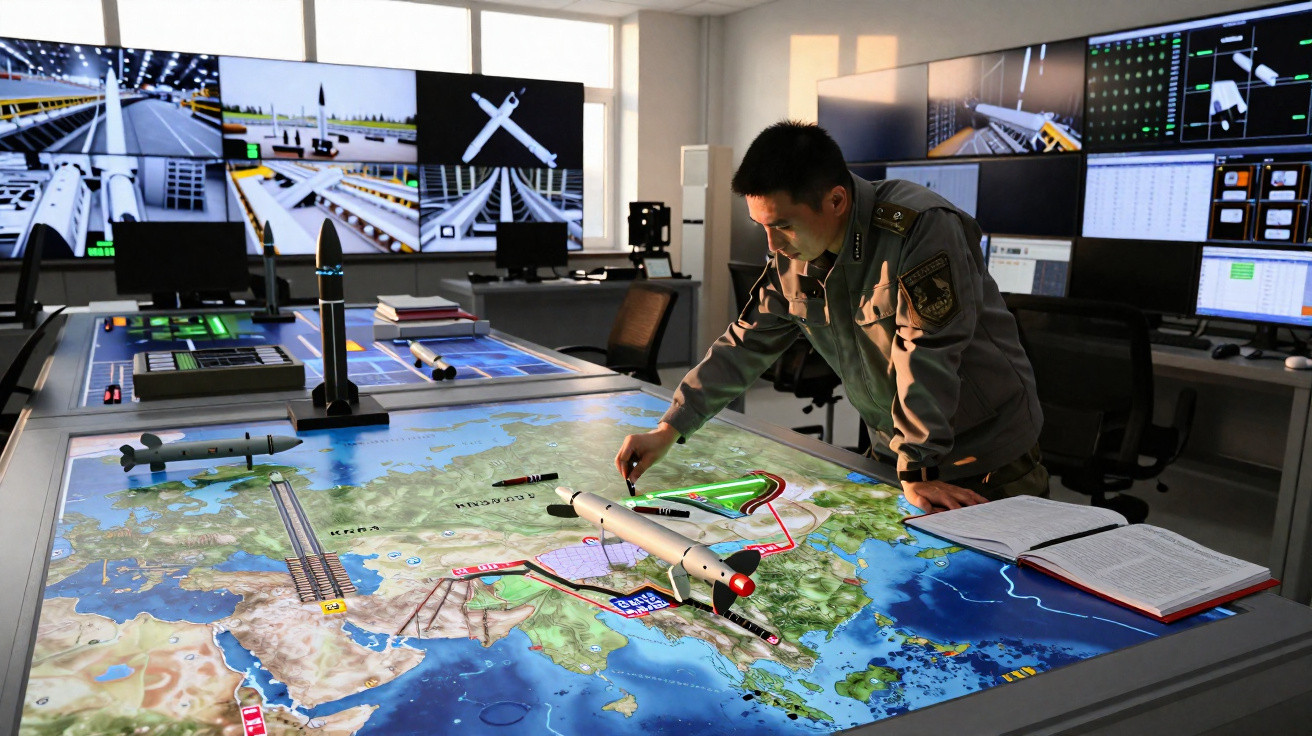
Following a new intelligence report, Ukraine’s Ministry of Defence Main Directorate of Intelligence (GUR) stated that Russia now has approximately 50 North Korean ballistic missiles from the KN-23, KN-24 and KN-30 families. The figures, assessed in July, are part of a report on Russia’s missile stockpiles, which also highlights Moscow’s ability to sustain high levels of ballistic and cruise missile production.
Russia’s missile inventory, according to the GUR
According to information provided by the GUR to Ukrainska Pravda, as of 5 August Russia had around 130 9M723 ballistic missiles for Iskander-M systems assigned to its force grouping. This total was supplemented by approximately 400 RM-48U missiles for S-400 systems, more than 600 Oniks missiles, more than 450 Kalibr missiles, more than 120 Zircon missiles and up to 100 Kh-101 cruise missiles. July estimates also placed stocks of Kinzhal aeroballistic missiles at about 50 units.
That inventory also includes roughly 50 North Korean KN-23, KN-24 and KN-30 ballistic missiles. The GUR’s information does not specify how many missiles belong to each model, meaning these figures cannot establish the precise share represented by the KN-30. Its inclusion nevertheless confirms that Ukrainian intelligence regards these systems as assets available within Russia’s arsenal.
KN-30 North Korean ballistic missiles in Russia’s arsenal
The KN-30, the Western designation for North Korea’s Hwasong-11C ballistic missile - also identified as Hwasong-11Da - is a larger variant in the Hwasong-11 family and falls within the short-range ballistic missile category. Fuelled by solid propellant and intended for launch from mobile ground platforms, it conducted its first known test on 25 March 2021, when it demonstrated a range of at least 600 kilometres. North Korea has also claimed that the system can carry a warhead weighing up to 2.5 tonnes, although this capability has not been independently confirmed.
Russian missile production capacity remains high
At the same time, the Ukrainian assessment underlines Russia’s substantial ability to replenish its arsenals through its own defence industry. According to the GUR, Russia’s military-industrial complex can manufacture more than 200 ballistic and cruise missiles each month, prioritising the Iskander-M system’s 9M723 missiles, Kh-101s and Kalibr missiles. During July, 9M723 production reached 65 units, exceeding the monthly target of 60 missiles, while a further 87 Kh-101s were manufactured.
For RM-48U missiles used by S-400 systems, production is estimated at approximately 50 units per month. Russia plans to manufacture more than 480 of these missiles during 2026, a figure that more than doubles the target set for 2025. Ukrainian intelligence assesses that maintaining these production levels enables Moscow to preserve its stockpiles despite the continuing use of missiles in attacks on Ukraine.
The GUR update emerged after a Russian attack on the Kyiv region in which Oniks, Zircon and Iskander-M missiles were used, along with missiles intended for S-400 systems, the latter capable of reaching their targets on a ballistic trajectory. In this context, the estimate of around 50 North Korean missiles available to Russia, including KN-30s, adds to an arsenal combining domestically produced systems with weapons supplied from abroad and an industrial capacity that, according to Ukrainian intelligence, continues to expand.



Comments
No comments yet. Be the first to comment!
Leave a Comment