
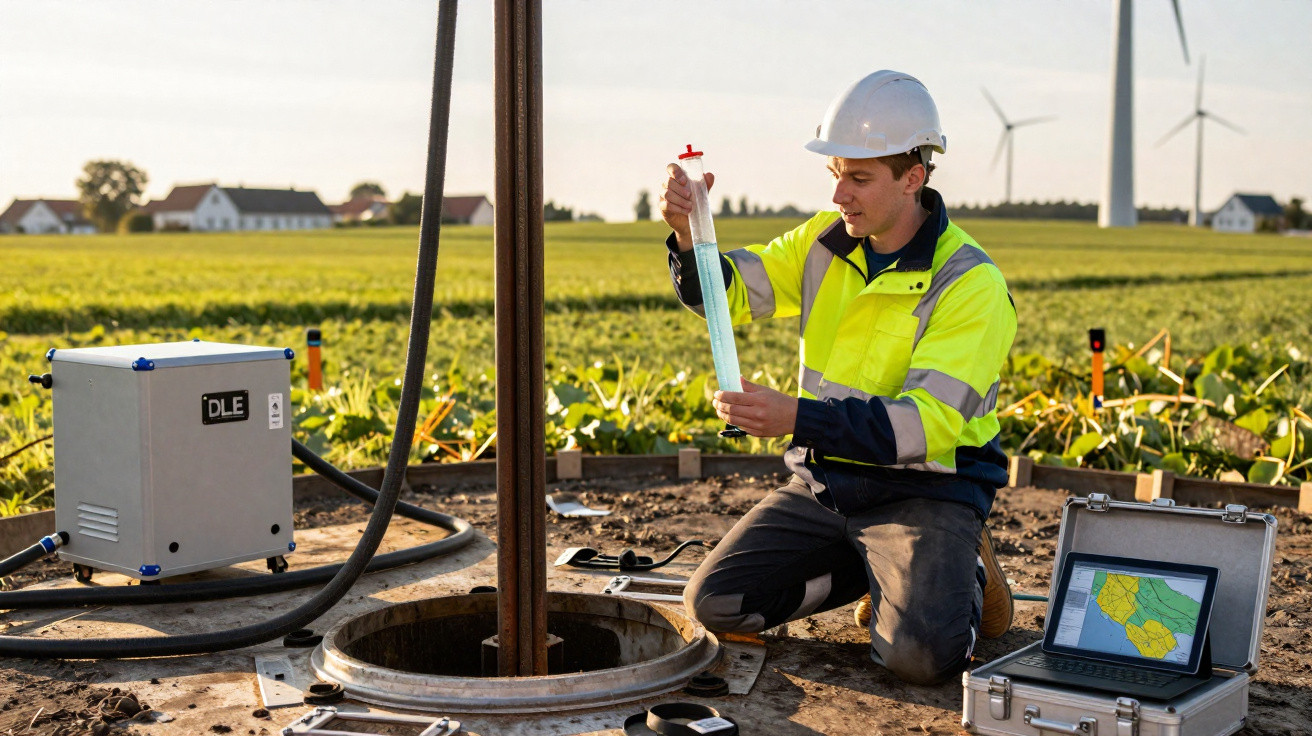
Germany has revealed an unexpected advantage at a time when countries worldwide are competing for access to lithium, one of the critical raw materials underpinning the energy transition. A deposit containing 43 million tonnes of lithium carbonate equivalent (LCE) has been identified in northern Saxony-Anhalt, placing the country among the world’s largest holders of this strategic resource.
Germany’s 43 million-tonne lithium deposit
The newly announced discovery was validated in August 2025 by Sproule ERCE, an international consultancy specialising in natural-resource assessments. Its review followed the CIM/NI43-101 technical standard, which is internationally recognised for the reliability and transparency it brings to the certification of mineral reserves.
The deposit was identified through Neptune Energy’s lithium extraction project in the Altmark region, which is currently in its pilot phase (2024–2028). The company is using an innovative, environmentally responsible direct lithium extraction (DLE) process that obtains lithium from deep underground water without open-cast mining.
Impact on the automotive industry
The find marks a strategic step forward for Europe’s automotive sector, which relies heavily on lithium to manufacture electric-vehicle batteries. This reserve could enable Germany to substantially reduce its dependence on imports while strengthening the region’s energy and industrial security.
“Lithium is a strategic raw material for several industries, especially for the production of lithium-ion batteries used in electric vehicles and energy storage systems. Germany currently relies heavily on imports of lithium and derived products. Neptune Energy’s planned extraction in the Altmark region could strengthen European security of supply by encouraging domestic production and reducing exposure to geopolitical risks,” the statement reads.
International Energy Agency (IEA) forecasts suggest that global demand for lithium could rise by between 240% and 490% by 2035, depending on the scenario. This makes the discovery even more significant for the future of electric mobility and Europe’s energy transition.
Economic impact in Altmark
According to consultancy IW Consult, the economic impact could reach €6.4 billion between 2025 and 2042 if the project achieves annual production of up to 25,000 tonnes of lithium. Around 67.4% of that amount would be generated in the Altmark region, where gross regional product could grow by an average of 2% each year.
“Although we are still in the project development phase, the socioeconomic figures clearly demonstrate the potential that lithium production will bring over the coming decades. There could be significant positive effects for the Altmark region and beyond,” said Andreas Scheck, Neptune Energy’s chief executive.
The project also envisages the creation of 1,500 jobs per year, with direct and indirect effects across sectors including energy, technology, transport and services.





Comments
No comments yet. Be the first to comment!
Leave a Comment