
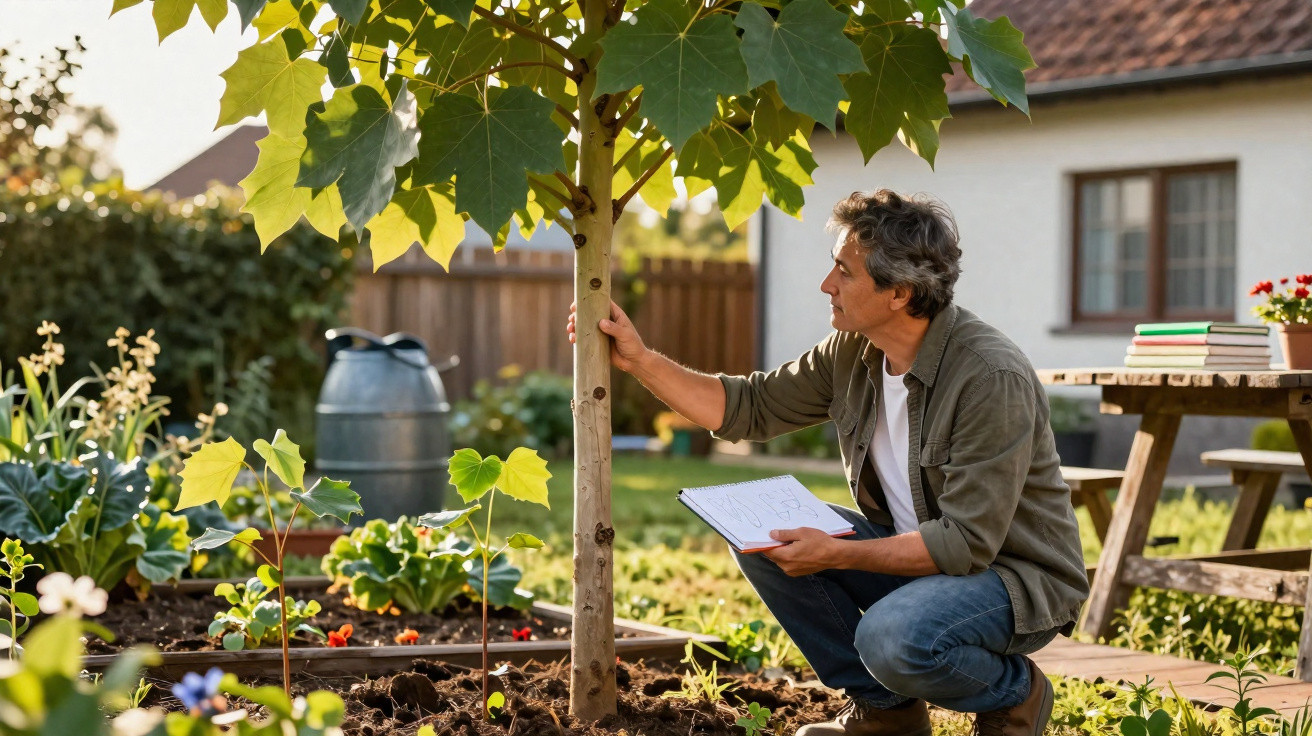
In gardening forums, at plant fairs and in garden centres, one name has been appearing with increasing frequency: paulownia, also known as Paulownie. This deciduous tree grows so quickly that some people already celebrate it as a “miracle tree”. The truth is more nuanced: it can be an asset when the site, expectations and ecological consequences are all right.
What is behind the hype around Paulownia?
Paulownia originates in East Asia, particularly China and Japan. It has long been valued there as an impressive ornamental tree and for its lightweight, easy-to-work timber. In Europe, however, it is attracting attention for a different reason: its speed of growth.
“In ideal conditions, paulownia can grow by several metres each year and gains height considerably faster than many native tree species.”
Gardeners describe trees that, after just four years, already stand taller than an entire garage roof. At a time of increasingly frequent heatwaves, such a rapid source of shade is especially appealing. For people in sparse new-build developments or urban gardens that heat up quickly, the tree can seem like a shortcut: fast growth, fast cooling and a fast visual impact.
Climate claim: a CO₂ absorber promoted as a “miracle solution”
A second factor is driving the trend: depending on the species and how it is grown, paulownias can absorb substantial amounts of carbon dioxide. They quickly produce a large volume of biomass in the form of timber and leaves. This has created the image of the perfect “climate tree” - plant it, let it grow, and the problem is solved.
Organisations including the Food and Agriculture Organization of the United Nations (FAO) and the European Environment Agency temper that enthusiasm. A tree’s carbon balance depends on numerous factors:
- location and soil quality
- watering and maintenance requirements
- lifespan and use of the timber
- effects on the local ecosystem
A fast-growing tree that is removed again after only a few years or grown in a monoculture does not automatically deliver a climate benefit.
Paulownia in the garden: striking, but not without pitfalls
Anyone who has seen a paulownia in person can understand why opinions about it are so divided. Its trunk thickens rapidly, while its enormous leaves form a dense canopy. In spring, it also produces flowers.
Paulownia flowers before its leaves emerge. Numerous fragrant, lilac-coloured flower clusters then hang from the branches. Bees and other insects can find plenty of nectar there - an advantage in gardens within built-up areas where insects are scarce.
Advantages over other “turbo plants”
The comparison with bamboo, another exceptionally vigorous plant, is revealing. In many neighbourhoods, bamboo has become a nuisance because its runners travel beneath fences and patios over long distances. Paulownia does have a strong root system, but it does not produce aggressive runners.
“Many specialists regard paulownia as a more manageable alternative to bamboo where rapid shade is the main priority.”
This can be beneficial near property boundaries, patios or front gardens. Root barriers, which are almost essential for bamboo, are usually not an issue here.
The catch: demanding when it comes to location
The “miracle tree” reputation conceals one decisive fact: paulownia is more particular than many promotional texts suggest. To achieve its genuinely rapid growth, the tree needs:
- a position in full sun
- deep, loose soil
- effective drainage without waterlogging
- regular watering during its first years
When it is planted in too much shade or in heavy, compacted clay soil, the turbo effect often fails to appear. Nurseries report disappointed customers whose paulownia barely grows any faster than an ordinary ornamental tree despite optimistic advertising promises. In exposed locations, the large leaves may tear, while young shoots can be damaged by late frosts.
Ecological risks: when the miracle tree becomes a nuisance
Alongside the challenges of finding the right location, there are ecological concerns. Some species, especially the very commonly sold Paulownia tomentosa, produce huge quantities of seed. In mild regions, these seeds readily germinate in cracks, on derelict land or along woodland edges.
The tree can therefore spread without control. In parts of North America, the species is already listed as a problematic non-native plant. Conditions vary between regions in Central Europe, but conservationists view its potential to naturalise with concern.
“A tree deliberately planted in plantations or cities can become disruptive competition for native species in natural habitats.”
Risk of monocultures driven by a trend plant
At the same time, interest among investors and project developers is increasing. Rapid growth, supposedly “climate-friendly” timber and high biomass make it appealing for reforestation schemes and timber plantations. Yet if large areas are planted mainly with paulownias, a familiar problem emerges: monoculture.
The International Union for Conservation of Nature (IUCN) and other organisations have stressed for years that species-rich planting is far more resilient. The greater the diversity within a planting, the better it withstands:
- pests and diseases
- intense heat or periods of frost
- extended drought
- storm events
By contrast, plantations consisting of a single tree species can fail completely if a particular pest or fungus appears that attacks that exact species.
How home gardeners can use Paulownia sensibly
There is no reason why private gardeners must avoid paulownia altogether. Many garden experts consider it an interesting feature, provided it remains part of a varied planting scheme.
“Paulownia is ideally suited as a specimen tree, set within a mix of shrubs, perennials and native woody plants.”
Anyone tempted by this “turbo tree” should follow a few basic rules:
- Check in advance which species or cultivar is being offered and how it behaves in the local area.
- Choose the site carefully: sunny, sheltered from the wind and with good soil.
- Plan a diverse planting scheme from the outset rather than relying on only one tree species.
- Remove any self-sown seedlings that appear in cracks, gravel areas or beds on a regular basis.
Where there is sufficient space, paulownia can also be maintained as a pollarded tree: the trunk remains, but the crown is cut back hard at regular intervals. This encourages oversized leaves and dense shade, although it comes at the expense of flowering.
A wider issue lies behind the trend
The story of paulownia says much about our current relationship with nature. Fast-growing trees, CO₂ promises and eye-catching terms such as “miracle tree” suit an era in which many people are seeking rapid answers to the climate crisis and hotter summers.
At the same time, specialists repeatedly point out that successful long-term garden design and climate adaptation work differently. Anyone wishing to make their plot more resilient to climate change should think beyond one spectacular tree and focus on structures:
- shade provided by trees and pergolas
- humus-rich soils that retain water
- hedges and shrubs instead of gravel gardens
- varied plants suited to the location
Paulownia can be an interesting piece of this puzzle. It does not replace old fruit trees or native oaks, maples and limes, all of which provide habitats for many animal species. When planted thoughtfully, it is an addition.
Ultimately, it is worth looking beyond the trend: those who observe their garden step by step, listen to regional specialists and prioritise diversity can create a green oasis that still works in 20 years’ time - with or without paulownia at its centre.






Comments
No comments yet. Be the first to comment!
Leave a Comment