
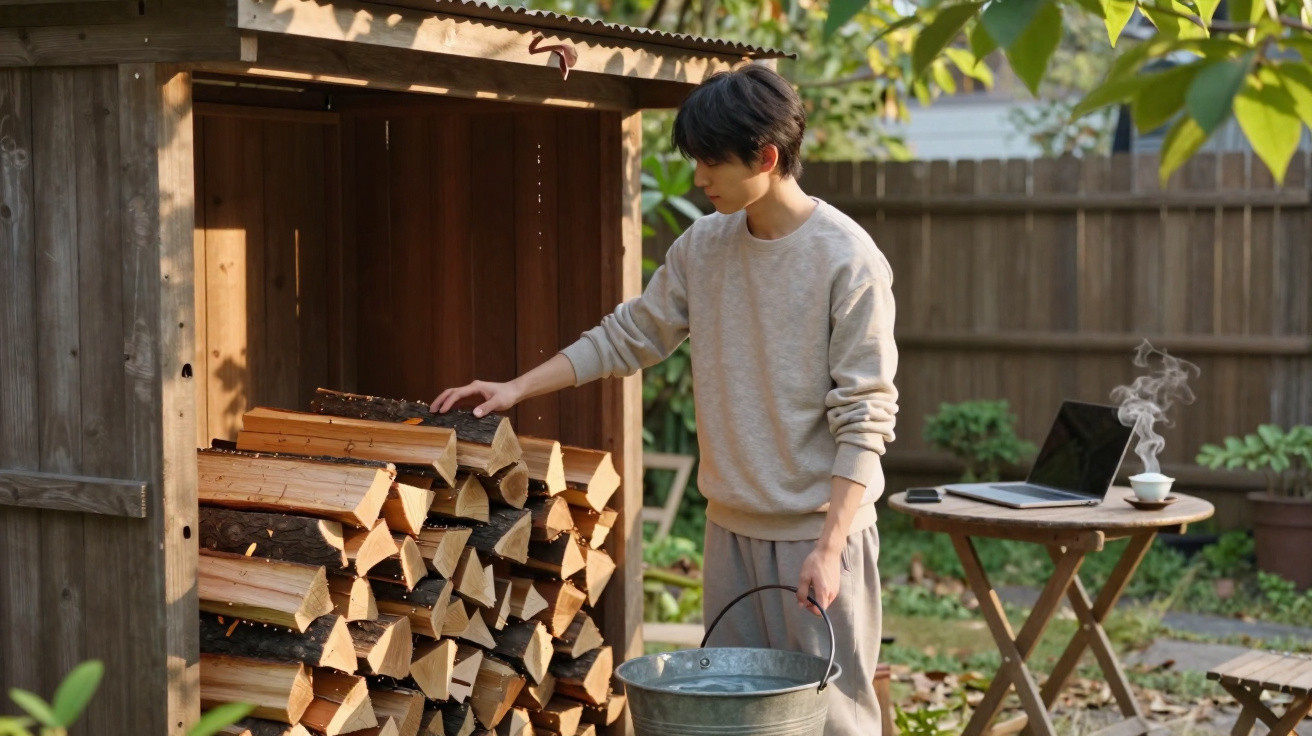
The Japanese proverb commonly linked to Zen Buddhism uses two straightforward tasks - cutting wood and carrying water - to explore enlightenment, routine and presence. Its central idea is that gaining knowledge or undergoing inner change does not remove ordinary responsibilities: daily life carries on, although the way it is experienced can alter profoundly.
What does cutting wood and carrying water mean?
Cutting wood and carrying water stand for essential, repetitive jobs required in everyday life. In the interpretation connected with the Zen tradition, they represent what must be done regardless of status, knowledge or major personal achievements.
The Japanese proverb draws attention precisely to activities that bring neither prestige nor an immediate reward. Even when someone feels they have reached a deeper understanding of themselves and life, they remain responsible for practical needs.
- Cutting wood represents necessary, uncomplicated work;
- Carrying water symbolises meeting present needs;
- Repetition highlights the consistency of everyday life;
- Enlightenment changes perception, rather than necessarily changing the tasks themselves.
What changes after enlightenment?
The main difference lies in a person's relationship with what they do. Before enlightenment, a routine task may be approached with haste or resistance, or viewed as an obstacle on the way to something supposedly more important. Afterwards, cutting wood and carrying water remain exactly the same actions, yet they can be carried out with greater awareness of the present moment and less desire to escape it.
Why is the proverb connected with humility?
Enlightenment does not place anyone above ordinary work. That contrast is one of the saying's strengths: even after a profound intellectual or spiritual transformation, people still need to work, organise their lives and attend to their most basic requirements.
For this reason, the teaching can also be read as a warning against feelings of superiority. Wisdom, experience and recognition do not excuse anyone from the simple actions that sustain daily life. The idea can be expressed through several attitudes:
- Continuing to carry out basic tasks after an achievement;
- Not equating knowledge with superiority over other people;
- Paying attention to the process, rather than only the result;
- Recognising worth in ordinary, repetitive activities.
How can the Zen Buddhism idea be applied to modern routines?
Today, cutting wood and carrying water may be symbolically replaced by cooking a meal, studying, working, washing the dishes or completing a repetitive task. Zen Buddhism values the attention given to the action at hand, and the proverb suggests that continually seeking an exceptional moment may cause someone to overlook the part of life that occupies most of their time.
- Complete one task at a time with attention;
- Do not treat every routine as an interval before “real life”;
- Maintain necessary habits after reaching a goal;
- Avoid believing that an achievement will remove all ordinary obligations.
Does the proverb teach that nothing changes after an achievement?
No. The saying does not claim that learning, developing or pursuing goals is pointless. Its point is more precise: inner transformation does not have to create a completely different outward life. The same person may continue doing the same job, living in the same home and meeting the same responsibilities, while beginning to see those experiences differently.
That is why the Japanese proverb remains associated with presence in everyday life. Before enlightenment, there is wood to cut and water to carry; after it, those tasks still exist. What may disappear is the expectation that wisdom can only be found at some extraordinary destination, far removed from the simple actions performed every day.






Comments
No comments yet. Be the first to comment!
Leave a Comment