
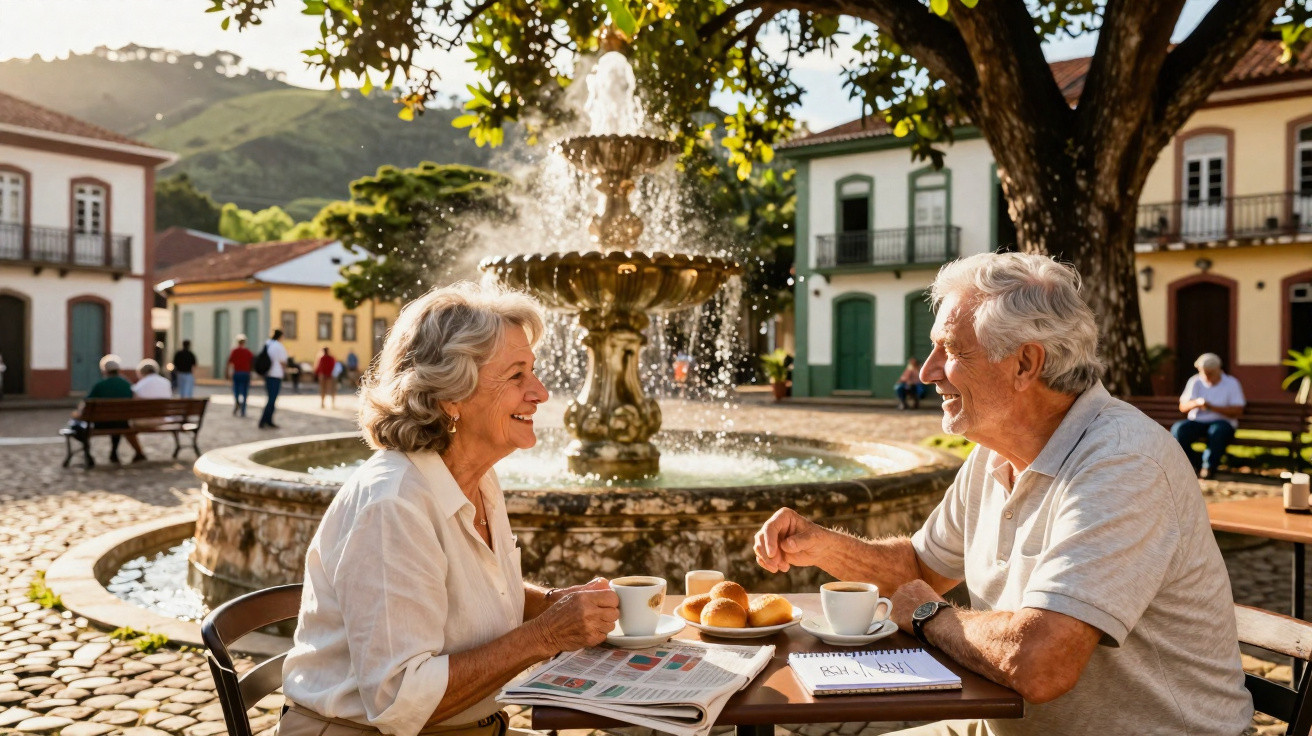
Poços de Caldas, in southern Minas Gerais, brings together a high-altitude climate, a thermal-water heritage, healthcare provision and an urban infrastructure that help explain its frequent appeal to people seeking a smaller place to live after retirement. The municipality topped Minas Gerais in the 2025 IFDM and, according to recent property-market surveys, still has lower housing costs than the state capital.
Why is Poços de Caldas regarded as a quality-of-life leader?
This claim must be understood through the relevant measure. In the 2025 edition of the Firjan Municipal Development Index, which was calculated using official 2023 data, Poços de Caldas ranked first among Minas Gerais municipalities, recording an overall IFDM score of 0.8457. It was also the only city in Minas Gerais to feature among Brazil’s 100 highest-ranked locations in that edition.
The index assesses employment and income, education, and health. Poços de Caldas scored 0.8254 for health alone, placing it in the high-development category. In IPS Brasil 2026, meanwhile, the city did not lead the overall ranking for southern Minas Gerais, although it came first in the region for the Foundations of Wellbeing dimension, with 76.68 points. This covers health, education, the environment and access to information.
What makes Poços de Caldas attractive for retirement?
Its particular appeal comes from combining the scale of a medium-sized city with services commonly sought at this stage of life. Poços de Caldas recorded 163,742 residents in the 2022 Census and had an estimated population of 172,339 in 2025. It is therefore far smaller than a metropolis, while still offering established retail, universities, healthcare and tourism.
- A high-altitude climate, with milder temperatures than in many Brazilian cities;
- A healthcare network suited to an important regional centre;
- Parks, squares and green spaces woven into the urban area;
- Shops and services that lessen the need to travel to major capitals;
- A wellbeing-tourism tradition associated with mineral and thermal waters;
- A more manageable urban routine than that found in large metropolitan areas.
Is living in Poços de Caldas genuinely cheaper than in Belo Horizonte?
Housing is one area where the contrast is particularly clear. Property listings compiled in 2026 indicated an average rental price of around R$ 28 per square metre in Poços de Caldas. In Belo Horizonte, residential rents reached roughly R$ 50.13 per square metre during the first half of the same year. As these surveys use different samples and methodologies, the figures should be treated as market references rather than an official comparison of total living costs.
Living in a tourist city does not, however, mean that every neighbourhood is inexpensive. Central districts, properties close to visitor attractions and larger houses can command high prices. Grocery costs, private healthcare, service charges, car ownership and lifestyle choices should also be factored in before relocating.
Watch the video below from the De fora em Juiz de Fora channel, which showcases Poços de Caldas in Minas Gerais:
Why do the waters and climate remain important to the city?
The history of Poços de Caldas is closely tied to its mineral waters. For decades, local tourism grew around thermal treatments, bathhouses and springs. That tradition remains one of the city’s defining features and continues to draw visitors looking for rest and wellbeing. Municipal tourism inventories identify the waters themselves as one of the main reasons people choose the destination.
- Termas Antônio Carlos is one of the city’s historic landmarks;
- Mineral springs form part of the local tourism identity;
- The altitude brings colder winters and comparatively mild summers;
- Parks and gardens strengthen its appeal for outdoor walks and outings;
- Tourism gives prospective residents a chance to explore the city before deciding to move;
- Its proximity to the São Paulo countryside broadens regional travel options.
Does population growth mean retirees are moving there?
Poços de Caldas has been gaining residents, but without specific data on migration profiles, this rise cannot be credited solely to the arrival of retirees. What the indicators do show is that the city has features that matter to people hoping to leave a major capital: strong socioeconomic results, healthcare, a milder climate, leisure opportunities and a housing market that may be more affordable than Belo Horizonte’s.
This same combination also brings together two distinct groups. For tourists, Poços de Caldas remains the traditional city of waters, known for its thermal baths, parks and mountains. For those planning retirement, the visit can serve as a trial run for everyday life: assessing neighbourhoods, distances, prices and services before deciding whether a holiday destination could also become a permanent home.



Comments
No comments yet. Be the first to comment!
Leave a Comment