
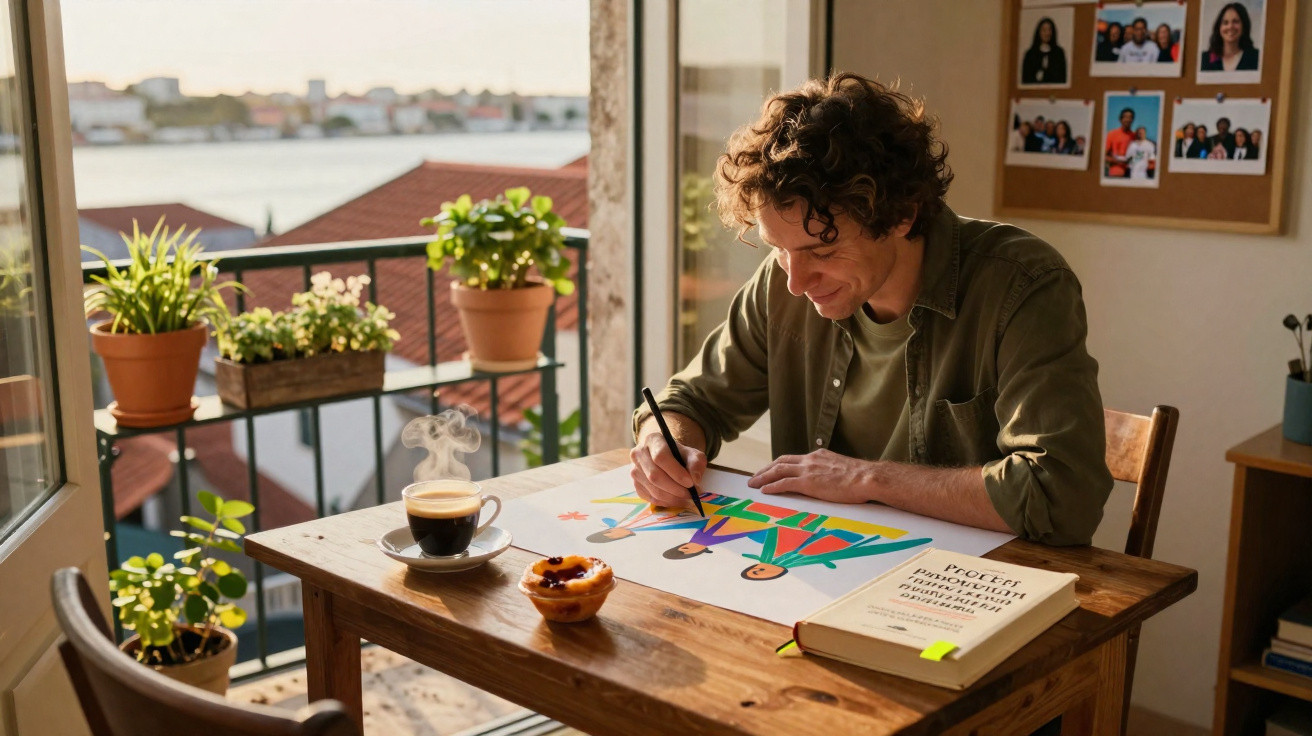
Money, status and flawless health often take centre stage, but many people discover an unexpected emptiness after achieving them.
Psychologists increasingly suggest that something less obvious, yet more profound, matters too: the way you live from one day to the next influences how happy you feel.
Moving from solving problems to creating better lives
For much of the 20th century, psychology concentrated largely on easing suffering by treating depression, anxiety and trauma. Its focus was on what goes wrong for people. In the late 1990s, American psychologist Martin Seligman encouraged the discipline to consider a different question: what if it also explored what helps people flourish?
This shift gave rise to positive psychology, which examines strengths, meaning, positive emotions and relationships alongside symptoms. Seligman later outlined three “happy lives” which, together, improve long-term wellbeing more consistently than pursuing wealth or achievement alone.
Living well, in this model, is less about a single big goal and more about three intertwined lifestyles that you can gradually strengthen.
They are the pleasant life, the engaged life and the meaningful life. Each draws on a separate source of happiness. Those who develop all three generally report greater life satisfaction, stronger mental health and more resilience when things go wrong.
The pleasant life: teaching your brain to notice small joys
The pleasant life is usually the first one people identify with. It centres on positive emotions, including joy, comfort, amusement, contentment and gratitude. Rather than simply seeking short-term pleasure, it involves learning to spot these experiences and make them last instead of hurrying past them.
Seligman presents this lifestyle as an intentional search for everyday joy. Although that may initially seem superficial, research indicates that positive emotions support physical health, encourage more flexible thinking and reinforce social connections.
What the pleasant life means in practice
- Enjoying a tasty meal rather than looking at your phone as you eat.
- Creating modest enjoyment rituals, such as a lunchtime walk or a favourite podcast during your commute.
- Practising gratitude by listing three good things that happened before bed.
- Allowing yourself to laugh at something daft instead of dismissing it as childish.
Such actions cannot fix structural problems, but they work as emotional “micro-charges”. They lift your usual level of positive emotion and offset the tendency many of us have towards worry and criticism.
The pleasant life is about training your attention to linger on good moments long enough for your brain and body to register them.
However, evidence indicates that pleasure on its own has limits. People who pursue only enjoyable experiences may quickly adapt, requiring increasingly intense stimulation to get the same boost. This can leave them continually seeking the “next hit”. That is where the second lifestyle becomes important.
The engaged life: losing track of time in a positive way
The engaged life centres on what psychologists describe as “flow” – periods when you are so immersed in an activity that time appears to shrink. You may not be smiling, yet you feel intensely involved and fully alive.
With this lifestyle, you shape your days around your strengths. Rather than forcing yourself through activities that exhaust you, you purposefully select pursuits that stretch your abilities without becoming unmanageable.
How engagement supports lasting happiness
Research shows that people are happier when they spend more time in flow states, even where the activity is difficult. Mastery, progress and concentration create a kind of satisfaction that differs from passive entertainment.
| Low engagement day | High engagement day |
|---|---|
| Hours of aimless scrolling, television playing in the background and an indistinct sense of boredom. | Focused work on a project, sport or hobby that pushes your skills. |
| Repeated clock-checking and restless movement between tasks. | Losing awareness of time because your attention is completely absorbed. |
| Brief bursts of distraction with little feeling of achievement. | A clear sense of “I did something that mattered to me today”. |
You can move your life towards greater engagement by considering three straightforward questions:
- Which tasks make me ignore my phone for at least 30 minutes?
- In what situations do I feel challenged but capable, rather than bored or overwhelmed?
- What strengths do others regularly praise in me – and how frequently do I really use them?
Happiness here comes less from pleasure and more from immersion: using your strengths so fully that self-consciousness fades for a while.
Work, parenting, volunteering, sport and creative projects can all provide engagement, provided you are actively applying your abilities rather than simply enduring your routine.
The meaningful life: contributing to something beyond yourself
The third lifestyle extends beyond individual contentment. The meaningful life develops when everyday choices are connected to a purpose larger than personal comfort, whether that means helping others, supporting a cause, mentoring or creating something that will outlast you.
In Seligman’s model, this involves recognising your values and talents, then using them in service of something beyond your personal aims. That could involve your community, future generations, a social initiative or simply those closest to you.
Why meaning safeguards mental health
Wellbeing research repeatedly finds that people who believe their lives have meaning manage stress, grief and uncertainty more effectively. They still feel pain, but place it within a broader narrative.
- Giving a few hours each month to a local charity.
- Mentoring colleagues or junior staff instead of viewing work as an individual competition.
- Bringing up children with clear family values that you seek to demonstrate, not merely discuss.
- Applying a personal skill, from languages to finance, to support people without access to that resource.
The meaningful life often feels quieter than pleasure, yet it creates a strong backbone: a reason to get out of bed when everything else feels shaky.
Meaning need not appear heroic. For some people, it comes from reliably caring for one individual. For others, it is found in supporting a long-term workplace or neighbourhood project. The essential point is that your actions feel consistent with your values.
Why the three lifestyles are strongest together
These three approaches to living do not compete with one another. They function more like three pillars. If one is less stable, the other two can bear some of the load, but a secure life typically depends on all three:
- The pleasant life eases everyday stress through positive emotion.
- The engaged life counters stagnation and boredom.
- The meaningful life provides purpose and coherence.
Long-term Harvard research into adult development has underlined the importance of close, supportive relationships for enduring happiness. Those relationships often combine all three styles: shared pleasure, absorbing conversations and activities, plus mutual support centred on something greater than either person alone.
Many people already favour one lifestyle strongly. Some naturally seek pleasure, others are motivated by projects, while others feel most energised by serving others. Seligman’s argument is not so much about altering your personality as filling in what is missing, so that wellbeing is not reliant on only one source.
The PERMA model: a usable guide
To make this approach practical in daily life, Seligman also introduced the PERMA framework. Every letter represents an element associated with greater wellbeing:
- P – Positive emotions
- E – Engagement
- R – Relationships that feel supportive and enriching
- M – Meaning and purpose
- A – Accomplishment and a sense of achievement
The model corresponds with the three lifestyles: pleasure relates to positive emotions, engagement is self-explanatory, and meaning represents purpose and contribution. Relationships and accomplishment extend across all three, shaping how powerful each lifestyle feels.
A simple way to use PERMA is to ask yourself where you feel strongest and where you feel a gap, then adjust one habit at a time.
Trying out your own three lives
Rather than attempting to overhaul everything at once, many psychologists recommend “micro-experiments” carried out over one or two weeks. For instance, you could:
- Include one small pleasure every day, such as a brief walk or mindful coffee, and give it your full attention.
- Set aside 45 minutes for one absorbing activity without notifications, with the aim of entering a light flow state.
- Carry out one meaningful action each week that directly helps another person or advances a cause you value.
Monitoring your mood alongside these changes may reveal patterns. You might find that engagement affects your sleep, or that meaningful actions alter how you experience stress at work. In time, this information can inform larger choices, including changing your role at work or rebalancing your social life.
For people experiencing anxiety, depression or burnout, these ideas are not a substitute for medical treatment or therapy, but they may complement both. Pleasant experiences can ease severe inner criticism. Engagement may gently rekindle interest when motivation is low. Meaning can make treatment objectives feel less abstract and more closely linked to the life you want to lead.
Therapists are increasingly incorporating these principles into coaching, workplace schemes and school curriculums. They teach adults and children to recognise strengths, create supportive relationships and link everyday habits to their values. The aim is not permanent happiness, which no lifestyle can promise, but a deeper reserve of resources to draw upon when life becomes difficult.






Comments
No comments yet. Be the first to comment!
Leave a Comment