
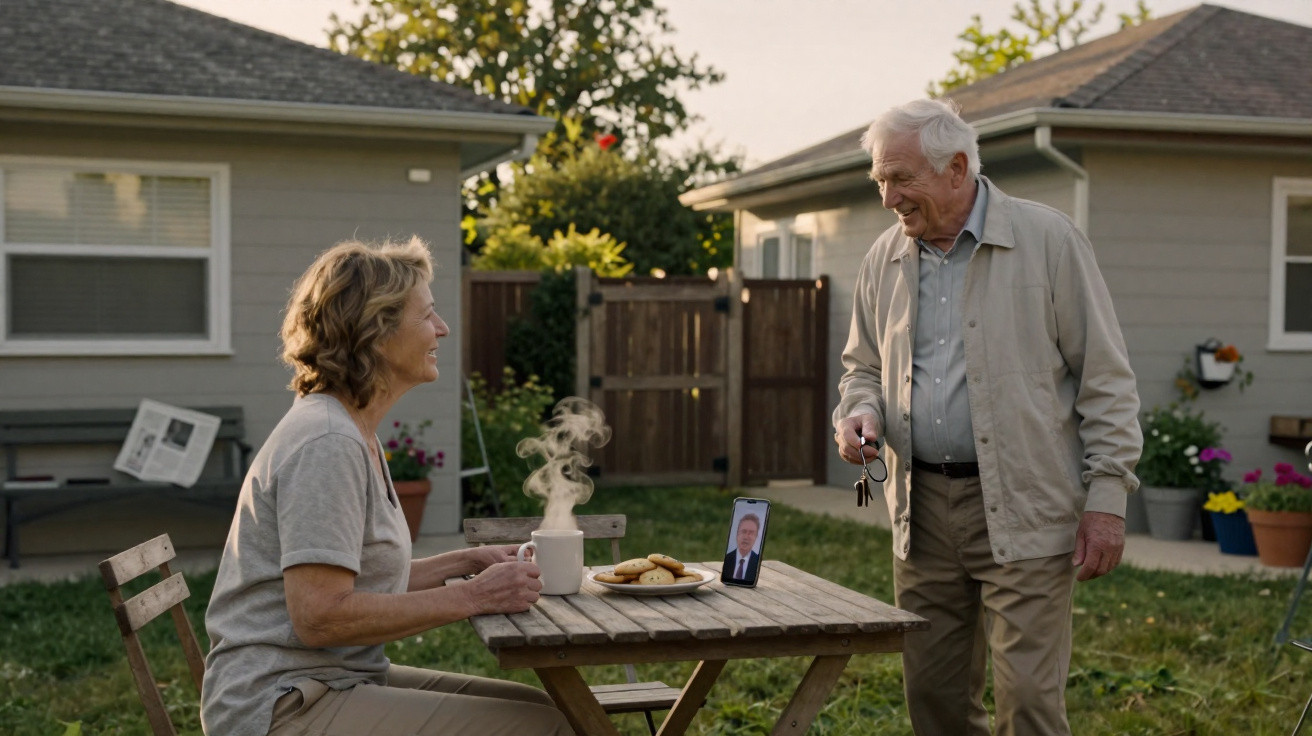
Living near family does not solve everything, but small everyday get-togethers can provide lasting relief from days that feel too quiet.
At first, it was simply a practical arrangement: moving closer to relatives, sharing a meal now and then, and lending a hand whenever somebody needed one. As the days passed, however, this new set-up brought something else to the surface: a more frequent, less formal presence that was often far more valuable than any grand speech.
Connections rebuilt without formal arrangements
Loneliness does not always mean complete isolation. Many people see their children, neighbours or friends, yet the gaps between visits are too long to truly dispel the feeling of emptiness. Seeing someone every fortnight can be pleasant, but it does not necessarily replace the unplanned interactions that give the week its rhythm.
When relatives live only a few minutes from one another, such moments are easier to create. Someone may pop in to say hello after doing the shopping, bring over a slice of pie, help move a piece of furniture, look after an unwell child or water the plants while someone is away.
“It is not always the big family gatherings that bring people closest together. More often, it is the ordinary gestures repeated without a second thought.”
Conversations become more spontaneous too. A question asked in the garden can turn into a lengthy chat. A coffee on the patio may prevent an entire afternoon from passing in silence. This availability alters how every person sees their place within the family.
Garden coffee becomes a meaningful routine
A garden, balcony or even a small courtyard can have a particular role to play. These spaces offer an easy reason to meet up. There is no need to prepare a meal or tidy the whole house: two chairs, a hot drink and a few minutes are enough.
This relaxed setting can sometimes make it easier for relatives to discuss subjects they would avoid at the family table. Concerns about ageing, health, money or children can find their place more readily in a conversation without ceremony.
Small but regular habits
Consistency matters more than length of time. Someone who knows they will see a relative on Tuesday morning or Sunday afternoon has an anchor in their schedule. The meeting does not have to be arranged rigidly; it can simply become a habit.
- having coffee together after taking the children to school;
- going for a short walk before lunch;
- sharing leftovers from a meal instead of eating alone;
- making preserves, gardening or doing DIY together;
- calling each other at a set time on days when nobody can visit.
These actions may appear ordinary, yet their impact builds over the weeks. They create recent memories, provide things to talk about and prevent family contact from being limited to emergencies or celebrations.
Small favours give everyone a role again
Accepting help can be difficult, particularly for someone accustomed to managing independently. Feeling reliant on others may encourage withdrawal. By contrast, doing a favour, however minor, restores a sense of being useful.
Cooking a dish for a family neighbour, collecting a parcel, keeping an eye on the house during a holiday or helping with homework are all ways of taking part. The relationship no longer rests solely on receiving assistance; it becomes an exchange.
“Feeling that you are expected for a practical task can turn an empty day into a useful one.”
This aspect is especially powerful between generations. Grandparents can pass on a recipe, share family history or teach a child how to plant tomatoes. Younger people, in turn, can assist with a phone, an online procedure or a car journey. Everyone has something to contribute.
Organising family proximity without imposing
Living nearby does not mean being available at every moment. For relationships to remain comfortable, everyone must be able to say no, protect their own timetable and retain their privacy. Constant presence can become burdensome when it is not freely chosen.
A few straightforward rules can prevent misunderstandings:
- let people know before calling round, unless a clear routine has been established;
- avoid turning every visit into a family obligation;
- share out help between several relatives whenever possible;
- respect rest periods and personal activities;
- speak openly when an expectation becomes too demanding.
Family proximity works best when it does not feel like supervision. The aim is to increase opportunities to run into one another, not to monitor how each person lives.
When family cannot be there
Not everyone is able to live near their children, parents, brothers or sisters. In that situation, the same principles can exist on a different scale. A neighbour, local shopkeeper, community group, walking club or council-run workshop can provide similar regular opportunities to connect.
The term “social network” does not refer only to interactions on a screen. It also means all the people a person can approach, speak with or ask for a small favour. The more varied that network is, the less likely it is that a temporary absence will leave someone alone with their difficulties.
The benefit develops over time
The first days after a life change can feel unsettling. People need to find their place in one another’s homes, adapt to new routines and avoid reading every quiet moment as rejection. Gradually, landmarks emerge: the sound of the gate, morning coffee, a grandchild stopping by or a call before dinner.
This quiet presence does not remove every sad moment. It provides a rhythm, conversations and reasons to leave the house. In many families, it is precisely these details, repeated week after week, that make daily life feel more alive.






Comments
No comments yet. Be the first to comment!
Leave a Comment