
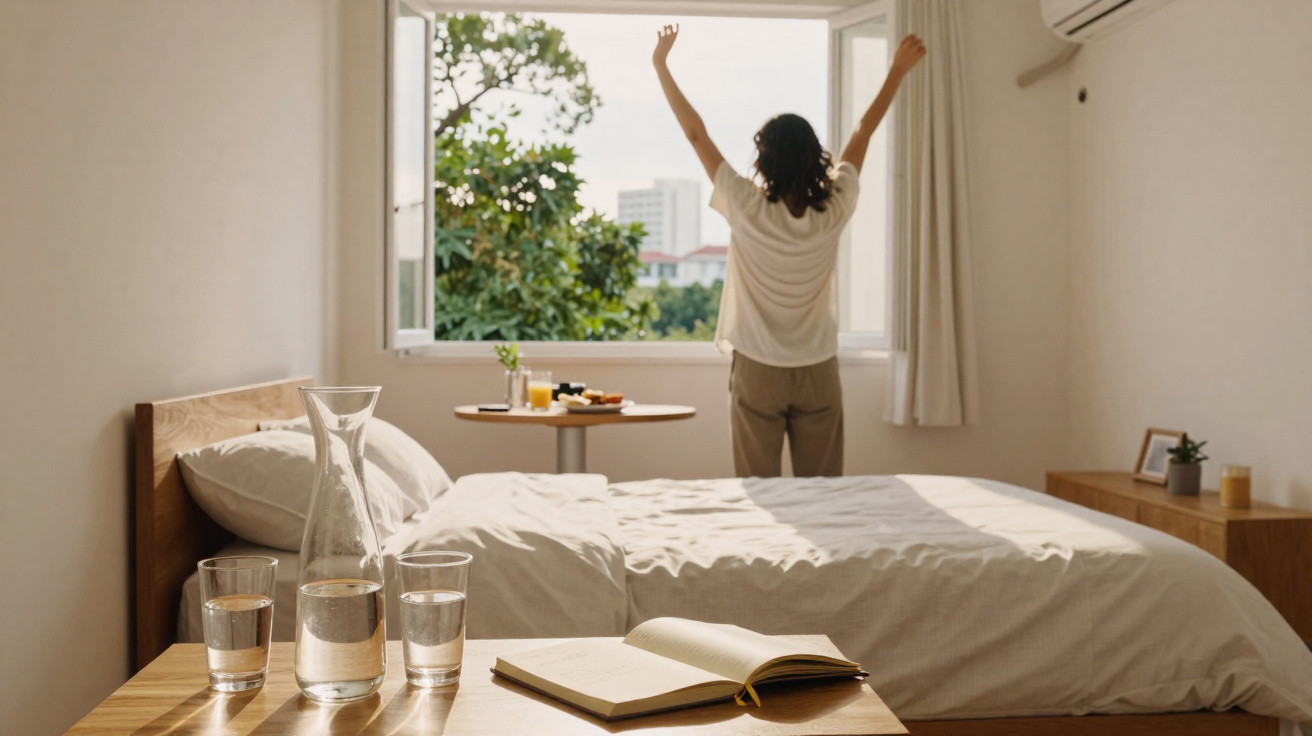
A few minutes here, a breath there - and the day already feels different.
Many people chase major goals while losing sight of everyday life. Micro-habits bring you back to the present. They require virtually no energy, yet support your health, calm and focus each day. This is where tangible progress happens, without frustration or drastic change.
Why small changes work
Tiny steps lower the barrier to getting started. Your brain enjoys success and rewards even the smallest tick on a list with dopamine. In this way, intention becomes action. Two features distinguish effective micro-habits from well-meant resolutions.
- The action is small, repeatable and requires minimal effort.
- The action is attached to an existing routine, without disrupting your day.
“Start ridiculously small. Stay consistent. Only increase it when it feels almost too easy.”
The 8 micro-habits for every day
Take one deep breath before every decision
One slow breath creates space between a stimulus and your response. It settles the nervous system and slows impulsive decisions. Breathe in for 4 seconds, hold for 2, then breathe out for 6. This mini routine works in meetings, chats and at the supermarket checkout.
Set yourself a “breathing point”: take one conscious breath every time before you press “Send”.
Make your bed every morning
A minute of tidying gives you an immediate first achievement and signals the start of the day. It reduces visual clutter in the bedroom and improves your mood in the evening, when you return to a neatly made bed. Fluff the pillows, pull the duvet taut, and you are done.
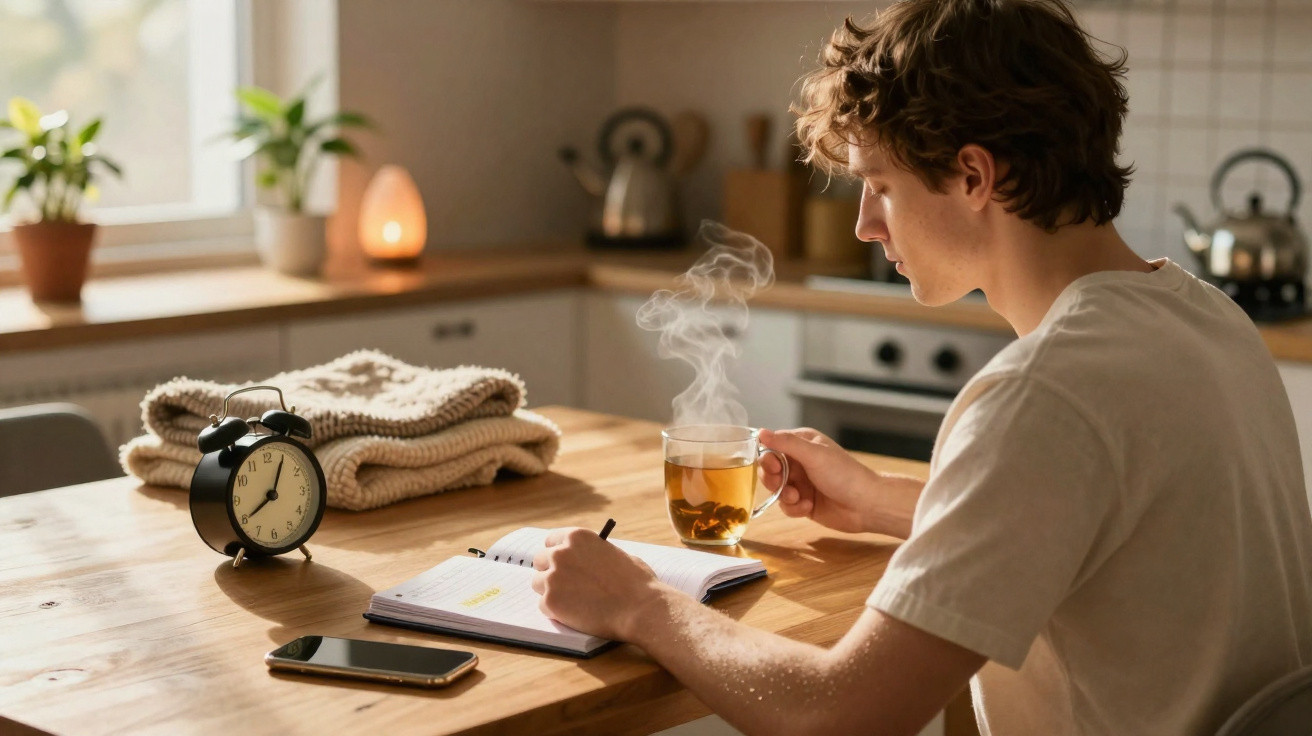
Write down one thing you are grateful for each day
One sentence a day is enough. Put it on a note or in a notes app. This small reflection trains your attention towards what is good and lifts the overall tone of your feelings. If getting started is difficult, use categories: person, moment, small thing.
Have a quick stretch every hour
Sitting allows tension to build up. Set an unobtrusive timer for 60 minutes. Get up, stretch your arms above your head, roll your shoulders and gently turn your neck. Ten to 20 seconds is sufficient. This improves circulation and reduces neck and lower-back pain at your desk.
Get fresh air in the morning
Natural light in the morning steadies your sleep-wake rhythm. Open a window, step onto the balcony or go outside for two minutes. Cool air wakes you up, while light reduces the sleep hormone melatonin and boosts energy for the next few hours.
Put your phone away while eating
Place your phone in a drawer or turn on “Do Not Disturb”. You will eat more slowly, notice fullness sooner and stop doomscrolling loops. If you are talking with others at the table, your connection improves too. Everyone benefits within 20 minutes.
Drink more water with two fixed glasses
Use just two anchors: one glass immediately after getting up, and another between two meals. Water lubricates joints, supports digestion and aids concentration. Use urine colour as a simple guide: pale straw yellow is appropriate.
Read one page in the evening
Reading one page before sleep calms the mind and replaces the glaring screen. Leave a book where you can see it on your pillow. If a few lines make you sleepy, choose short chapters or poetry. Set your reading light to a warm tone and keep your phone at least an arm’s length away.
| Habit | Time required | Trigger | Immediate benefit |
|---|---|---|---|
| Deep breathing | 10–12 sec. | Before sending/replying | Clearer head |
| Making the bed | 1 min. | After getting up | Early achievement |
| Noting gratitude | 30 sec. | Before lights out | Better overall mood |
| Hourly stretching | 10–20 sec. | Timer | Less tension |
| Fresh air | 2–5 min. | After brushing your teeth | More energy |
| Phone-free eating | Mealtime | Before the first bite | More mindful enjoyment |
| Glasses of water | 2×30 sec. | Getting up/between meals | Better hydration |
| Reading one page | 1–3 min. | In bed | Calmer sleep |
“Small rituals need hardly any discipline when they are built around existing triggers: ‘After X, I do Y.’”
How to put micro-habits into practice without stress
Begin with habit stacking
Link the small action to an established routine. These examples make it easier to begin.
- After brushing my teeth, I open the window for 2 minutes.
- Before replying to emails, I take one deep breath in and out.
- After lunch, I put my phone in the drawer for 20 minutes.
Reduce friction and increase reminders
Put the book on your pillow. Place your glass of water beside the coffee machine. Hang a mini resistance band over the back of your chair. Create visible prompts that guide you. Avoid obstacles, such as books on the top shelf or a bottle in the cellar.
Make progress visible
Use a seven-day tracker with boxes. One tick each day reinforces the positive feeling. Forget perfection. If you miss a day, mark “Continue” and restart at the next trigger. That way, you do not give up and keep the chain going.
Practical details that often make the difference
Sensible limits for water
Drink throughout the day and pay attention to thirst signals. People with heart or kidney conditions should clarify suitable amounts individually. If you sweat heavily, add electrolytes through foods such as nuts or vegetables.
Mini stretches that work anywhere
- Neck: bring your chin to your chest and hold for three breaths.
- Shoulders: make circular movements for ten repetitions.
- Back: place your hands on the chair back and push your breastbone forwards.
“Always choose the smallest version: one page, one glass, one breath. That threshold keeps you moving.”
Combination ideas for a 5-minute morning
1) Make the bed. 2) Open the window and breathe deeply. 3) Drink a glass of water. 4) Write down one gratitude. This sequence takes under five minutes and creates four positive markers: order, light, hydration and focus.
When everyday life feels demanding
Choose no more than two micro-habits at once. More than that increases the likelihood of stopping. Swap them when needed, but keep the number the same. Adapt triggers to your day. Working shifts? Move your light window to the start of your waking period. Frequently on the move? Pack a paperback and a small bottle.





Comments
No comments yet. Be the first to comment!
Leave a Comment