
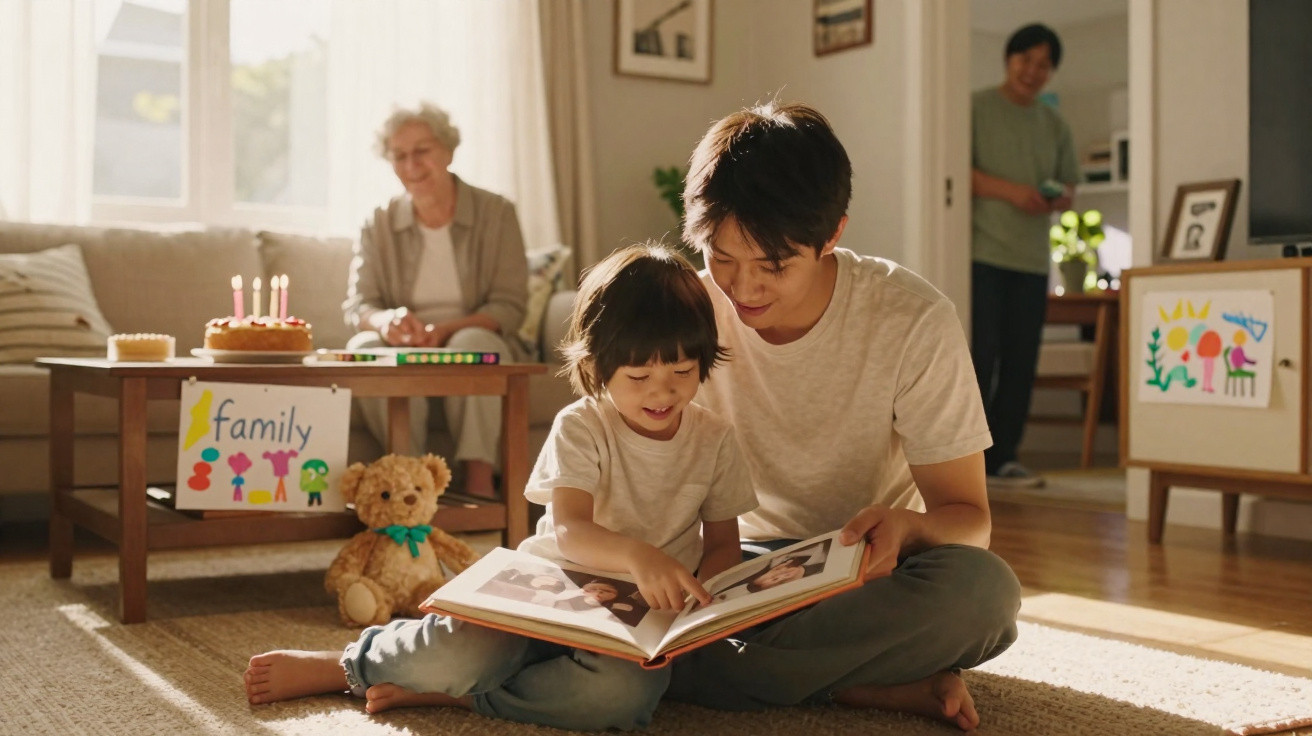
A psychologist identifies five common types of memories that tend to become especially deeply rooted in children. They are often ordinary moments that never make it into a photo album, yet they can shape a person's inner world for decades. Anyone caring for children can draw practical guidance from this knowledge on how to create a secure, warm foundation for later life.
Why early memories have such power
Childhood is not simply a period of growth; it is also a kind of internal record. A child's brain continually registers how safe, loved and noticed they feel. From this, core beliefs can develop, such as “I deserve to be here” or “I cannot rely on closeness”.
Early experiences become quiet beliefs: Am I welcome? Am I allowed to make mistakes? Will someone help me when things become serious?
Psychologist Carol Kim highlights five categories of experiences that leave a particularly lasting impression:
- quality time experienced together
- warm, encouraging words
- reliable rituals and family traditions
- witnessing kindness and helpfulness
- emotional support during difficult moments
These building blocks nurture self-confidence, compassion and inner resilience. The process starts long before a child can consciously say: “I remember that.”
1. Shared time when a child feels truly seen
The memories children often recount later are not expensive outings but genuine moments of closeness: playing a board game at the kitchen table, collecting leaves in the park or dancing spontaneously in the living room. What matters is that their caregiver is genuinely present and attentive.
Children are highly aware of whether adults are mentally still at work, focused on their phone or preoccupied with their own worries. Quality time is therefore not about following a planned activity, but about:
- putting the phone away and maintaining eye contact
- asking questions and listening without immediately judging
- following the child's pace rather than constantly hurrying them
From a psychological perspective, this sends an unambiguous message: “You matter to me just as you are.” This feeling lies at the heart of basic trust and often returns later as warm, vivid memories.
2. Words that build self-worth – or destroy it
Language can become an internal soundtrack. Certain phrases continue to echo in a person's mind decades later. Praise and encouragement create a very different path from mockery or continual criticism.
Typical phrases that remain in the memory include:
| Encouraging message | Destructive message |
|---|---|
| “I can see how much effort you are putting in.” | “You will not manage that anyway.” |
| “Making mistakes is alright; that is how we learn.” | “How can anyone be so stupid?” |
| “I trust you – go ahead and try.” | “Stop that, you will only make another mess.” |
Such remarks become internal voices. Children who regularly hear that someone believes in them are more likely to try new things later and less likely to give up when they encounter setbacks. By contrast, those who have repeatedly been put down often judge themselves with relentless harshness.
3. Rituals and family traditions as a secure framework
Rituals bring structure to life. For children, predictability offers important protection. Regular routines communicate that the world is not entirely chaotic and that certain things can be relied upon.
Common memory anchors include:
- the same saying or song before bedtime
- a regular pizza or games night each week
- baking biscuits together in December
- the family photograph on a park bench during the annual holiday
These traditions can appear modest, yet they are psychologically invaluable. They link generations, pass on values and give children a story to which they feel they belong. As adults, people often recall precisely these recurring scenes with a sense of security and belonging.
4. Witnessed kindness shapes compassion
Children constantly watch how adults treat other people. Actions matter more than words. A child who sees their parents carry a neighbour's heavy shopping bags upstairs, or remain calm when something takes longer at the checkout, learns that consideration is normal.
Kindness a child witnesses quickly becomes an inner benchmark for how to speak to people who seem weaker, stressed or helpless.
Formative situations may include:
- someone comforting a crying sibling instead of snapping at them
- an adult apologising after behaving unfairly
- the family helping someone move house in the neighbourhood
- part of a child's pocket money being donated to a cause that matters to them
Those who store away such scenes often find it easier to develop empathy. Children understand that they are not the sole centre of attention, but part of a network of relationships in which people support one another.
5. Emotional support in moments of crisis
The most defining moments are often those when something goes wrong: an accident, trouble at school, a separation or the loss of a pet. What matters then is whether a child feels met in their emotions or left alone with them.
Typical memories that can resonate for decades include:
- someone taking the child seriously when they are afraid of the dark
- a caregiver sitting by the bed at night when fever or nightmares are troubling them
- receiving closeness and understanding after a poor mark, rather than pressure alone
- someone helping them find words after an argument with friends
This creates the experience: “My feelings are allowed, and I am not alone with them.” Such emotional support strengthens resilience: the ability to respond to crises not with inner collapse, but through adaptation and growth.
How parents can intentionally create these formative moments
Nobody needs to manufacture perfect storybook scenes. Children do not need parents who entertain them around the clock; they need dependable people with real emotions. Small, repeated gestures have a greater impact than infrequent grand occasions.
Practical approaches for everyday life:
- set aside a few minutes of exclusive time each day when the child is the only focus
- deliberately say positive things rather than offering only criticism
- establish a simple evening ritual that remains manageable even on stressful days
- acknowledge your own mistakes – this shows that nobody has to be perfect
- do not dismiss intense feelings (“Don't be so silly”); name them instead (“You are really angry right now”)
What research says about childhood memories
Experts point out that children consciously remember only part of their early years. Even so, pre-conscious experiences also shape trust in relationships. Many adults notice this later in therapy or in their own partnerships, when old patterns emerge.
Studies repeatedly point to similar factors:
- reliable caregivers reduce the risk of anxiety disorders and depression
- emotional coaching – naming and supporting feelings – makes it easier to deal with stress
- positive family rituals act as a psychological buffer against pressures from outside
These findings do not make parents responsible for everything that happens later in a person's life. They do, however, show the enormous opportunity contained in everyday moments that may initially seem insignificant.
When your own childhood was difficult
Many adults read about these five types of memories and simultaneously feel: “I had very little of that.” This can be painful, but it can also be a starting point. Those who face their own history can make more conscious choices about which patterns they want to continue and where it is time to break away.
People who had little support in childhood can be especially sensitive to the needs of their own children. Professional support, such as counselling or therapy, can help them understand old wounds and allow new forms of closeness. In this way, experiences created in the present can become the positive memories of the next generation.






Comments
No comments yet. Be the first to comment!
Leave a Comment