

You are in the kitchen, holding your phone in one hand and a coffee in the other. The kettle hums away, a video plays with distant laughter, and notifications keep piling up. You reply to a message, scroll for a moment, take a drink - and the mug is suddenly empty.
You did drink the coffee. You were physically present. Yet, somehow, you did not experience it.
It happens on the bus as well, in the shower, or while walking to the supermarket. Entire stretches of the day can feel as though they have been cut into quick scenes.
There is one habit that can gently slow that edit down. A small act can make everyday moments feel longer, with no yoga mat or silent retreat required. It takes less than ten seconds to begin.
The surprisingly simple habit: single-tasking the moment
The idea looks dull on paper but can feel radical in real life: pick one ordinary activity and, briefly, do nothing except that activity. No phone, podcast or mental checklist - simply the task already in front of you.
Have your coffee and only have your coffee. Walk and only walk. Fold the laundry and only fold the laundry.
Your brain usually spends much of its time travelling between past regrets and future plans, so it suddenly has none of its favourite distractions. Initially, it may fidget. Then, something calmer can emerge. Colours seem a little clearer. Your body feels pleasantly heavier. Rather than racing ahead, time begins to move alongside you.
One woman I interviewed began by using toothbrushing. For two minutes, twice a day, she permitted herself nothing else. No scrolling through Instagram or silently redrafting an email - only the bristles against her teeth, the mint flavour and the sound of running water.
During the first week, she said it was almost irritating, like being trapped in a slow lift. In week two, she began noticing small details: the way stress made her clench her jaw, and how she always held her breath at the end. By the third week, those four minutes had become a modest anchor in her day. Nothing mystical happened, and there were no fireworks. They were simply four minutes in which she felt completely present.
There is a reason such a basic practice can land so powerfully. Our attention is divided into tiny fragments all day, while the brain enjoys its steady supply of new stimulation. Multitasking can feel efficient, yet dozens of studies show that continually switching attention quietly drains us and makes experience feel flatter.
When you single-task an ordinary moment, you are not just giving your mind a rest. You are also telling your nervous system, “Right now, this is enough.” That is an unusual message. It disrupts the low-level panic that says you ought to be somewhere else, achieving more or becoming better.
That is how a cup of tea can stop being a background prop in your day and become a genuine moment in your life.
How to practise presence in 30-second pockets
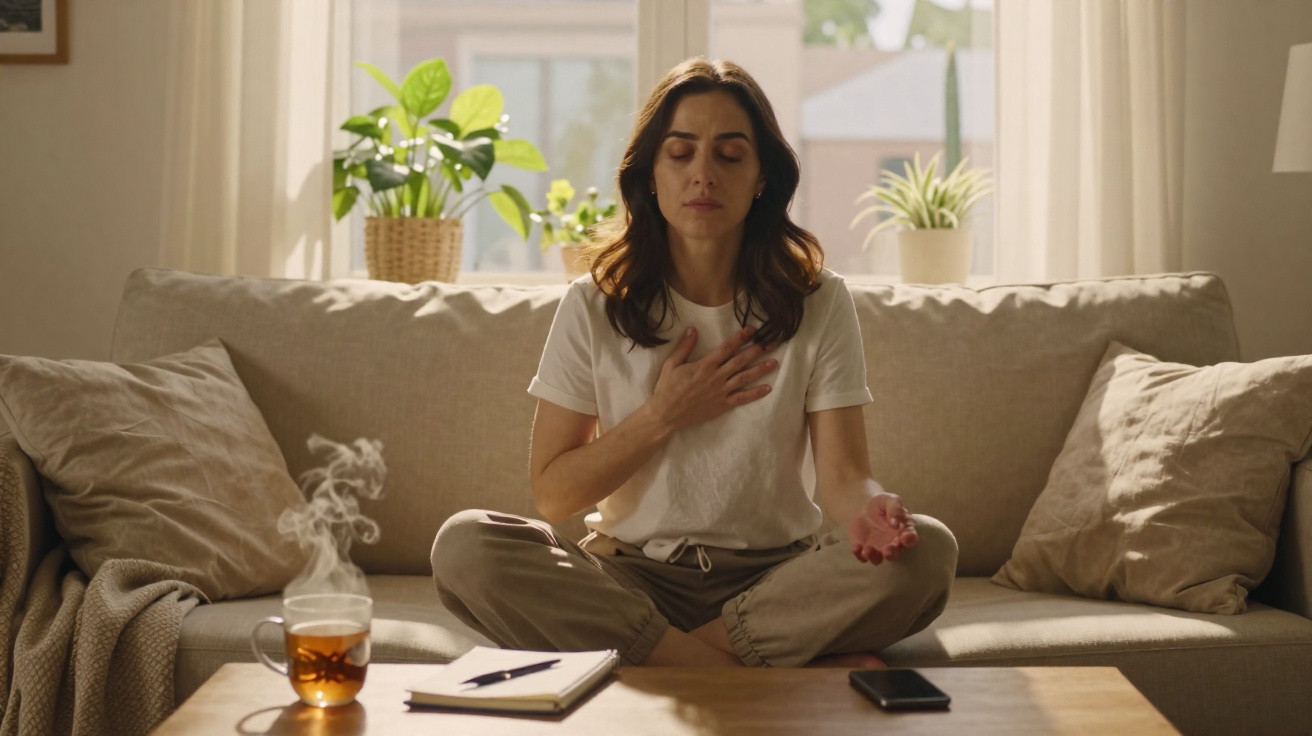
Begin almost absurdly small. Take a daily ritual that already exists and make it your “presence pocket”. Thirty seconds will do; a whole minute is enough if you are feeling ambitious.
For that brief interval, offer the activity your complete, imperfect attention. While washing your hands, for instance, notice the water temperature, the feel of the soap and the weight of your hands against one another. If thoughts arrive in a rush, that is fine. Observe them as you might watch cars pass a window, then return your attention to the physical sensation.
Keep the stakes low. You are not attempting to achieve enlightenment beside the bathroom sink. You are only testing what it is like to be where your body truly is.
Most people falter in the same way: they select a moment, try it twice, then “forget” for three days and conclude that they are hopeless at it. In truth, nobody does this perfectly every day.
The useful approach is to see forgetting as part of the practice rather than a failure. If you catch yourself scrolling while queuing at the bakery, instead of noticing the warm air and smell of fresh bread, that recognition is already a small win. You returned. For a second, you woke up.
Be kind to yourself. This resembles training a dog that has been free to run wild for years: it will dash away, and that is normal. Keep inviting it back, gently and repeatedly.
Presence is less about “emptying your mind” and more about “letting your mind be noisy while you stay with what’s in front of you.”
- Choose your anchor moment
Select one daily action, such as boiling the kettle, showering or locking the front door. - Set a tiny rule
For this activity, avoid your phone and any additional task. Do only that thing for 30–60 seconds. - Use a simple reminder
Try a Post-it note on the kettle, a dot on the bathroom mirror or a timer called “Breathe once”. - Stay with your senses
Ask yourself: What can I see? Hear? Feel in my body? Smell or taste? Focus on one sense at a time. - End with a micro-check-in
Once finished, quietly ask: “How do I feel, right now, in one word?” Then carry on.
Letting the small moments count again
As you start single-tasking small parts of the day, a quiet change takes place in the background. The bus journey becomes more than empty space between home and work. It develops its own character: the movement of the carriage, scraps of conversation and a child looking out of the window as you once did.
You may start to see that everyday life is not merely a waiting area for the “real” life of weekends and major trips. It is all of it. The in-between scenes are the film. Most of us know the feeling of reaching the end of a day that disappeared in a blur, unable to identify a single thing we truly experienced.
This practice does not solve everything. You will still hurry, drift into your thoughts and fall into late-night doomscrolling. You are human; that comes with the territory.
Yet each decision to be present for one familiar gesture takes a small part of the day back from autopilot. Those fragments accumulate in ways that may only become clear later, when a random Tuesday afternoon unexpectedly feels spacious.
You may find yourself enjoying the washing-up because the warm water is pleasant. You might also realise that a “boring” walk with your dog is often the calmest five minutes available to you. These are modest changes, but they gradually reshape what qualifies as a good moment.
You do not need a retreat, a specialist app or an immaculate morning routine to feel more present. You need ten sincere seconds with your coffee, two attentive minutes in the shower, or one unhurried breath before opening your laptop.
The simple truth is that presence exists precisely where you already are, hidden beneath layers of routine and rush.
If you single-tasked the next thing you did after reading this sentence, what would you choose? What small detail, patiently waiting all this time, might you finally notice?
| Key point | Detail | Value for the reader |
|---|---|---|
| Single-task one daily action | Give complete attention to a straightforward habit, such as drinking coffee or brushing your teeth | Offers a practical, low-effort route to feeling more present |
| Start with 30–60 seconds | Brief, defined periods that work within everyday life | Keeps the habit manageable, even on busy days |
| Use gentle reminders | Use visual prompts or small rules rather than rigid discipline | Lowers guilt and supports long-term consistency |
FAQ:
- How long before I actually feel more present? Many people detect a change within a week when they practise their chosen moment on most days. At first, it is subtle, like background noise becoming quieter.
- What if my mind won’t stop racing? This is normal. Presence does not mean clearing your mind; it means recognising what is happening while remaining with your senses.
- Can I do this while listening to music or a podcast? The effect is usually stronger with one main focus. If music helps you settle, keep it quiet while remaining anchored in physical sensations.
- Is this the same as meditation? It is related to meditation, but integrated into daily life. There is no special position or lengthy session, only conscious attention during everyday actions.
- What if I keep forgetting my “presence pocket”? Treat forgetting as a reminder that the habit matters. Each time you remember, you are already practising - returning is part of the exercise.





Comments
No comments yet. Be the first to comment!
Leave a Comment