
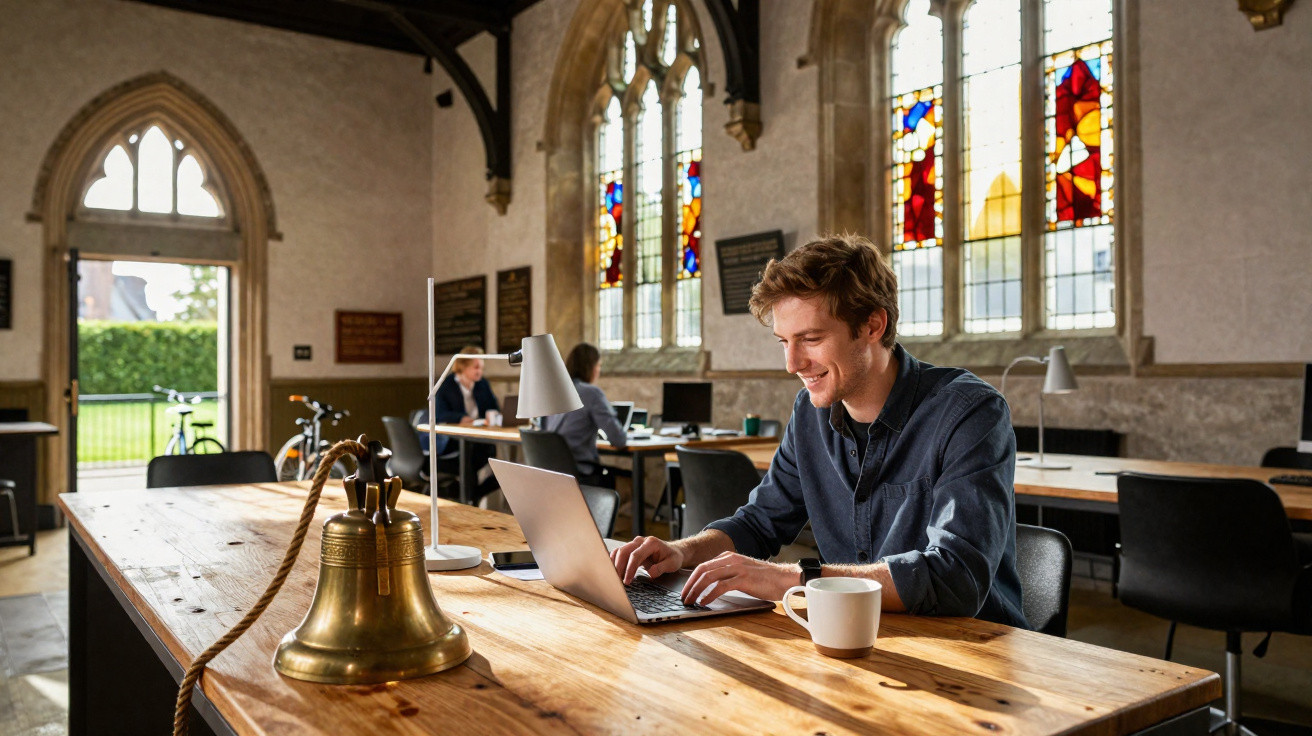
Rising energy costs, dwindling congregations and the post-pandemic rise of hybrid working have converged. Together, they are creating a new type of neighbourhood focal point: part sanctuary, part start-up workspace, and a test of heritage, planning rules and the meaning of “public space”.
I made my way up the tight stone staircase while morning rain drummed on the lead roof. In the tower room, where bell ropes once sliced through the air each Sunday, laptops flickered awake beneath stained-glass light. Coffee and damp hymn books scented the room, while keystrokes mingled with the far-off hum of a milk frother from the café beside the nave.
A graphic designer murmured into her headset while a retired chorister pulled a space heater nearer to her feet. A volunteer warden greeted a courier before checking reservations on a second-hand tablet. At the entrance, the vicar looked simultaneously surprised and delighted. At midday, the bells still sound.
The bell-tower’s unexpected new purpose
Picture the scene: pews standing empty through the week, towers with little use, and a local high street where shutters outnumber shopfronts. Thoughtfully run co-working can join up these absences. A tall bell-tower with substantial walls holds in heat and dampens sound, while its high windows transform daylight into a gentle aid to concentration.
Most of us know the desire for somewhere that is neither home nor office, but still feels secure, sociable and not overly talkative. A church tower provides that almost unintentionally. It also has what co-working companies spend millions trying to create: immediate character.
Consider a red-brick parish on a suburban crescent in Leeds, which tested twelve hot desks beneath its bell chamber. Local residents could buy day passes for a tenner, while students used the space free on Fridays. According to the churchwarden, weekday occupancy sits at about seven of the twelve desks, and café income trebled from February to June.
ONS data indicates that around four in ten UK workers worked from home for at least some of their time last year, and these hybrid routines are enduring. For that Leeds parish, the result was familiarity built week by week: people learned names, developed routines and gave the tower a steady hum. It became somewhere that knows you.
The financial case is more straightforward than it may seem. Weekly co-working revenue can help cover winter heating, pay for a heat-pump installation or provide dependable hours for a local caretaker. The building itself also assists: its vertical arrangement can keep work areas separate from worship, preserving Sundays for the sacred and making weekdays functional.
In planning terms, the main issues concern use classes and heritage protection. Churches generally fall under Class F1, whereas co-working sits within Class E, meaning change-of-use permission may be required. Listed towers also bring conservation requirements. The Church of England’s faculty system governs internal changes, but outside alterations still involve local planning authorities-where local voices carry the greatest weight.
Creating co-working without losing the church’s soul
Begin modestly, using arrangements that can be undone. Trial a three-month “pop-up” with folding desks below the bell frame for two days each week. Monitor reservations, energy use and neighbours’ views, then refine the set-up with lighter seating, additional task lighting, fewer extension leads and stronger Wi-Fi backhaul.
Plan the building in zones: heat the tower, leave the nave cooler, locate phone booths beside thick stone walls and reserve the brightest window for a silent desk. Establish easy rituals, such as tea at ten, bells at noon and a quiet hour after lunch. Let’s be honest: nobody follows a flawless routine every day, so the space should accommodate a little gentle chaos.
Steer clear of three familiar mistakes: overlooking access, promising too much speed and neglecting neighbours. A tower without a lift excludes people; where a full lift cannot yet be installed, move co-working down one floor and retain the tower for meeting pods. Technology should not be hurried-reliable, uncomplicated Wi-Fi is better than impressive-looking log-ins that fail at 9:01.
Sound behaves strangely around stone, so trial call booths with real conversations before purchasing ten of them. Speak early with bell-ringers, choir members and nearby traders too. Their support is a kind of currency on which this model relies. Let’s be honest: nobody really does that every day.
As a London planner told me, the strongest schemes “treat the church as a civic living room, not a cash machine.” A Midlands vicar expressed it more plainly: “We didn’t save a building; the building is saving us.”
“We didn’t want a museum. We wanted a living building-still worshipped in, now worked in-and held by the same community that raised it.”
- Check the use class: Moving from F1 (places of worship) to a limited Class E co-working use may require consent.
- Put heritage first: Nudge rather than carve. Use reversible fittings, breathable materials and minimal wiring.
- Access matters: Provide a step-free route, clear wayfinding and a quiet refuge space.
- Heat people, not the whole building: Zonal heating, draught lobbies and warm desks are preferable to overheating the nave.
- Safeguarding and hours: Set firm boundaries between work, worship and community groups.
The planning ripple: high streets, habits and heritage
Once a bell-tower becomes a weekday workplace, the surrounding neighbourhood changes. Footfall reappears at 8:45, coffee spending shifts from chain cafés to parish kitchens, and lunch breaks extend past greengrocers that had forgotten the sight of a queue. Where a local plan speaks of “15-minute neighbourhoods”, this is how the idea appears in stone and laptops.
Travel habits change too. Twelve hot-desk users arriving by bicycle require secure stands rather than new parking spaces; a parent with a pram needs a warm place at 3pm; a freelancer may need an evening key. Such details find their way into planning committee discussions, parish council minutes and neighbours’ tolerance. The process is local, gradual and untidy. It is also where trust is formed.
There are pressures to navigate. Could desk memberships displace the drop-in toddler group? Might improved Wi-Fi turn the vestry into something resembling a private club? These questions are not grounds for delay; they are design boundaries to work with. The reward matters: heritage saved, warm desks, warm hands, and the everyday civic rituals that weave a street together again.
This forms part of a wider story about care, climate and shared places. A bell-tower co-working space is not merely an inventive reuse of a building; it is a choice to keep history active rather than simply polished. Communities can explore what a “public good” means on a Tuesday afternoon, rather than only on a Sunday morning.
Planning policy can support it through a modest change of use, conditions on operating hours, cycle-parking requirements and perhaps a grant for heat pumps or secondary glazing. Then comes the human element: names written on mugs, a discreet nod towards someone completing a job application, and a bell that serves as a clock everyone accepts. You could be the next person climbing those stairs.
| Key point | Detail | Why it matters to the reader |
|---|---|---|
| Careful adaptive reuse | Respect heritage through reversible fittings, zonal heating and light-touch technology. | Demonstrates how character can be retained while making the space truly practical. |
| Practical planning | Understand F1-to-Class E changes, faculty versus listed-building consent, and local conditions. | Helps prevent delays, costs and last-minute redesigns. |
| Community as the engine | Co-working generates weekday footfall, supports traders and helps fund maintenance. | Recasts “saving” a church as creating a resilient neighbourhood. |
FAQ
- Do churches legally need planning permission to run co-working? Often, yes: churches fall within Class F1 while co-working is Class E; small, time-limited uses may be locally conditioned, and listed status introduces an additional heritage consideration.
- Will weekday co-working interfere with worship? Not where zones and hours are clearly set: worship remains in the nave or chapel, while work areas are concentrated in the tower or transept and cleared for major services.
- What does it cost to retrofit a tower? Light-touch arrangements can begin at under £15k for desks, electricity, lighting and Wi-Fi; lifts, insulation and heating improvements raise costs into the tens or hundreds of thousands.
- Is Wi-Fi and power reliable in thick stone walls? Yes, with preparation: install discreet trunking and mesh access points, place routers near the tower staircase, and test everything before making permanent alterations.
- What about bell-ringing and noise during calls? Bells are scheduled and belong to the character of the place; provide call booths, publish a ringing timetable and treat the noon peal as the city’s most charming clock.






Comments
No comments yet. Be the first to comment!
Leave a Comment